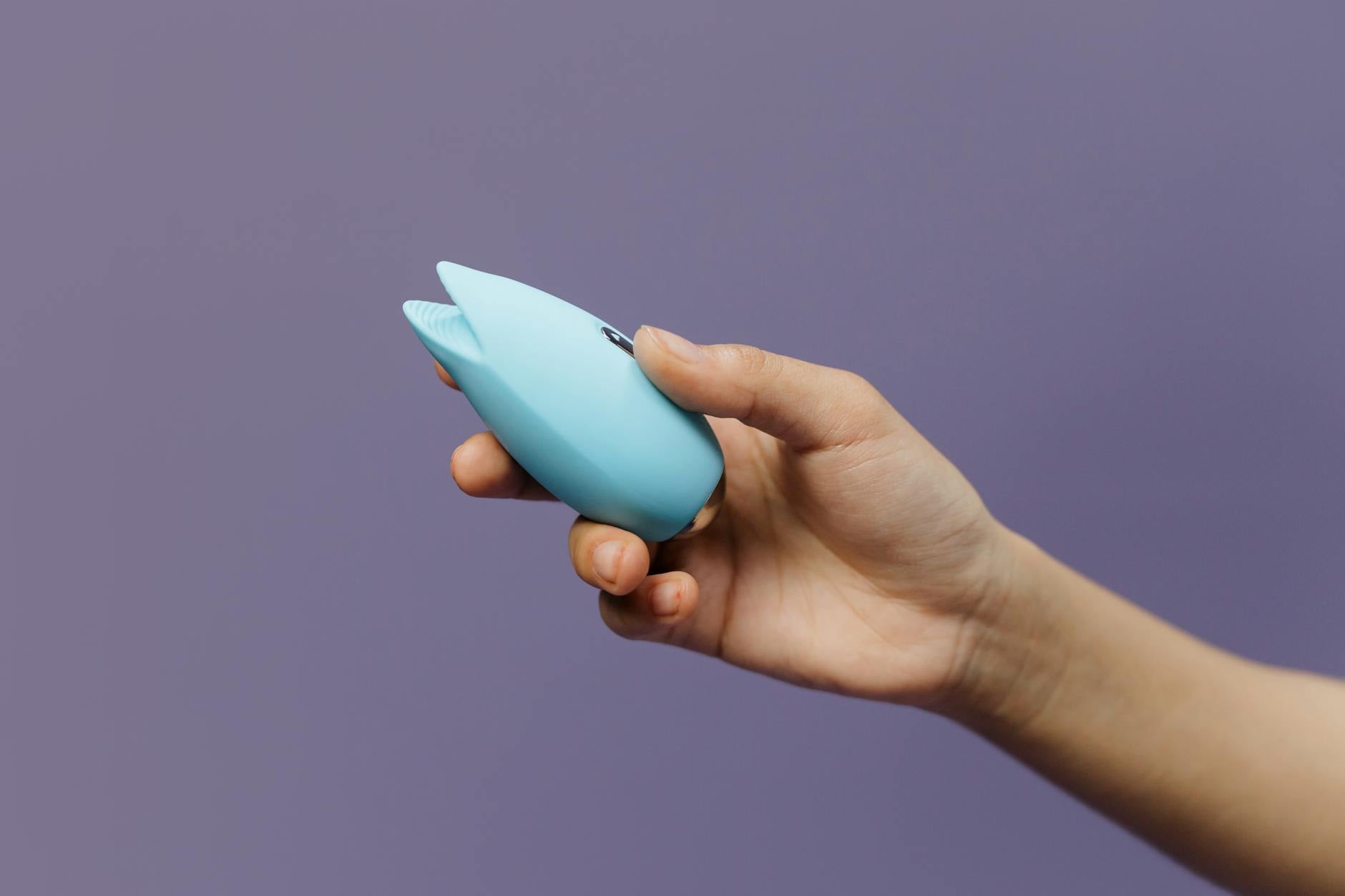
How Lemon Vibrators Work With Antidepressants and Low Libido
When SSRIs tank your desire and sensation, the right clitoral vibrator isn't a workaround. It's often the bridge that reconnects you to pleasure again.
Antidepressants save lives. They also flatline libido for about 40-60% of people who take them. That's not a character flaw or a sign your depression is "not that bad." It's pharmacology. SSRIs and SNRIs work by keeping serotonin in your brain longer. But they also suppress the dopamine and norepinephrine that drive desire and sensation. You can feel mentally stable and sexually numb at the same time. Both things are true.
Here's what doesn't get discussed enough: that numbness isn't permanent, and it's not unfixable. But it does require a different approach than what worked before medication.
When sensation is muted by antidepressants, you need intensity without pain. Most wands and bullet vibrators work by friction. They require direct, sustained contact on tissues that are already less responsive. It takes forever. Your leg cramps. You get frustrated. You give up.
Lemon clitoral vibrators like the Lem work differently. They use suction and pulsing patterns instead of simple vibration. This means they're stimulating nerve endings in a way that bypasses some of the sensation-dulling effects of SSRIs. You're not trying to feel tiny vibrations through a layer of pharmaceutical numbness. You're activating deeper nerve pathways that antidepressants affect less directly.
The result: faster arousal, stronger sensations, actual orgasms. Many people on SSRIs who've switched from wands to a lemon vibrator report orgasms returning for the first time in years.
There's not a ton of specific research on lemon vibrators and antidepressants because sex-toy companies don't fund clinical trials. But we know a few hard things.
First, suction-based stimulation activates a wider network of nerve endings than vibration alone. A 2019 study in Sexual Medicine Reviews found that suction devices triggered arousal responses in people with baseline low sensation by engaging both superficial and deep clitoral tissue. When sensation is chemically suppressed, that broader activation matters.
Second, the pattern variety in air-pulse vibrators (the Lem cycles through multiple patterns) engages neuroplasticity. Your brain adapts faster to single, repetitive sensations. Varied patterns keep your nervous system engaged. This is why the first pattern often feels nothing, but pattern four suddenly clicks.
Third, devices that require less active effort succeed more. Depression already drains motivation. If your vibrator requires conscious patience and perfect positioning, you'll abandon it. The Lem's suction does most of the work. You place it and let it do its job.
The strength of your antidepressant matters. Higher doses hit sensation harder. So do SSRIs that affect dopamine more aggressively. Paroxetine, for instance, kills libido more reliably than sertraline. If you're on something that's particularly hard on desire, know that upfront.
Timing also matters. Your body absorbs SSRIs on a schedule. Many people find sensation comes back slightly in the days after a dose or between doses. If you're struggling, try using your vibrator at different times of day. You might discover a window of slightly higher sensitivity.
If you're thinking about adjusting your dose to improve sex drive, talk to your doctor first. Sometimes a slight dose reduction works. Sometimes switching to a different SSRI helps. Bupropion (Wellbutrin), which works on dopamine differently, has fewer sexual side effects than standard SSRIs. But changing medication is a clinical decision, not something you solve with a vibrator alone.
What I recommend to most of my clients on antidepressants: start with a lemon vibrator designed for high sensation, use it consistently for at least two weeks (your brain needs time to recognize the new stimulus), and be radically patient. You're not trying to replicate pre-medication pleasure. You're building a new pathway to sensation. It often feels foreign at first.
Depression and antidepressants create a double bind around sexuality. The depression itself kills libido. Then the medication that treats the depression also kills libido. Your brain learns to think of sex as something that doesn't work for you anymore. Shame arrives. Avoidance follows.
Using a vibrator while you're still carrying that story is like trying to start a car with the parking brake on. The tool won't fix the belief.
What helps: separating the medical fact (antidepressants reduce sensation chemically) from the personal narrative (I'm broken, I'll never enjoy sex again). They're different problems. The chemical one, a good vibrator and maybe a conversation with your prescriber can address. The narrative one requires a shift. Usually that shift happens through small, successful experiences. You try the vibrator. Something feels good. The story cracks a little.
If you're in a relationship, this is also a conversation with your partner. "My medication affects sensation, so I need something different now" is not the same as "I'm not attracted to you anymore." Lots of couples muddle these together and end up in the wrong argument.
Bring up sexual side effects at your next appointment. This is not something to white-knuckle through. Your doctor has options.
Some people add bupropion to their SSRI. Some switch timing or dose. Some move to a different class of antidepressant entirely. Some try brief "medication holidays" if their condition permits. None of these conversations are shameful. Your psychiatrist has had this discussion with dozens of people.
If you're considering a vibrator specifically to work around antidepressant side effects, mention that too. Not because doctors need to approve your sex toy, but because it signals to them that you're taking this seriously and you want to solve it together. That context often matters for how they adjust your treatment.
One more thing: if you develop pain during sex or with a vibrator you're using, stop and talk to a doctor. Antidepressants don't usually cause pain, but they can contribute to tension in the pelvic floor. Pain requires different intervention than numbness. A physical therapist who specializes in pelvic health can help. But the first move is always to tell your prescriber what's happening.
Antidepressants often work best when you're patient with them. The sexual side effects sometimes improve after a few months as your body adjusts. Not always, but sometimes. If you're newly on medication and struggling with sensation, give it three to four months before you assume it's permanent.
In the meantime, a lemon vibrator isn't a consolation prize. It's a real tool that works differently than what you used before. It works with your nervous system rather than against its current state. For a lot of people, it's the first thing that brings sensation back. That matters. Your pleasure deserves that attention.
Yes. All antidepressants affect sensation, but some affect it more than others. SSRIs and SNRIs (the most common classes) reduce dopamine and norepinephrine. A suction-based vibrator bypasses some of that by activating different nerve pathways. You're not working against the medication. You're working with your nervous system as it is now.
Usually two to three weeks of consistent use. Your brain and nervous system need time to recognize new stimulus patterns. Some people feel something on day one. Most need several tries before a pattern suddenly "clicks." This is normal and doesn't mean the vibrator isn't working. Stick with it.
Maybe, but consistency matters more. Your nervous system adapts fastest when you use the same device repeatedly. If a lemon vibrator isn't working after four weeks, the issue is usually not the device. It might be dose-related, mental (shame or avoidance), or worth bringing to your doctor. Chasing new vibrators can be a form of avoidance. Give one device time first.
Absolutely. In fact, many couples find it helpful. Your partner isn't "replacing" you. You're both acknowledging that sensation is muted and solving it together. When introducing a lemon vibrator to your partner, frame it as a tool for reconnection, not a workaround for failure. The conversation changes everything.
You don't need permission, but mentioning it tells your doctor you're taking sexual side effects seriously. It can prompt a conversation about adjusting your dose or trying a different medication. Some people find that a small dose reduction, combined with a better vibrator, solves the problem. You and your prescriber can explore that together.
That's different. Antidepressants can lift mood while leaving emotional numbness intact, especially in the first few months. That's called emotional blunting. A vibrator can't fix that. It requires a conversation with your doctor about dose adjustment or switching medications. But physical numbness and emotional numbness often happen together, so it's worth addressing both.