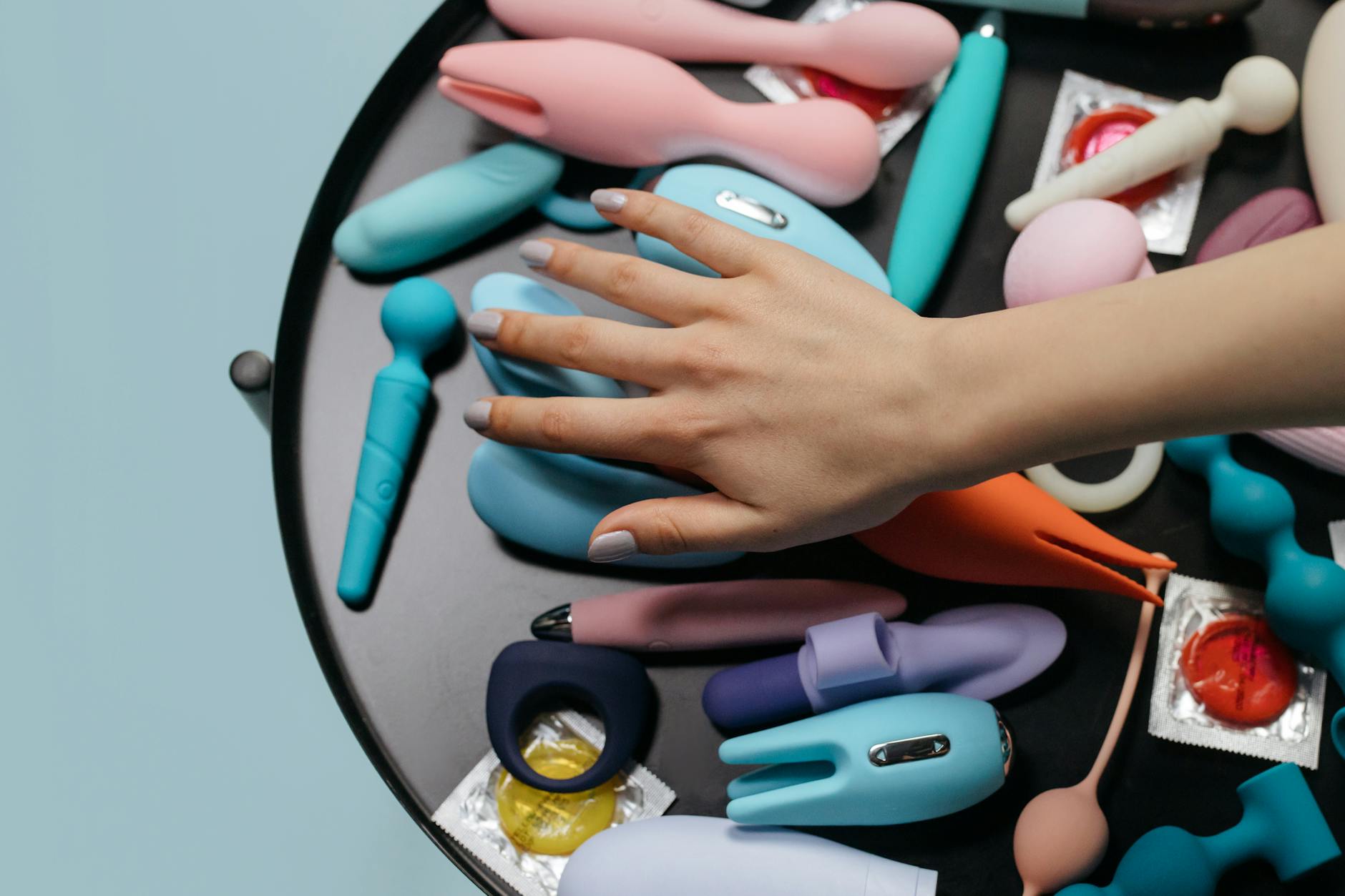
You spent years (maybe decades) having sex with the same person. Your bodies learned each other. The rhythm was automatic. And now you're alone with your own body for the first time in forever, and it feels weirdly unfamiliar. That's completely normal. Honestly, it would be weirder if it didn't feel strange at first.
The good news? Solo pleasure is one of the fastest ways to rebuild confidence in your sexuality. And tools like lemon vibrators and other clitoral vibrators make that process way easier than trying to go it alone.
When you're partnered, sex is partly about connection, partly about performance, and partly about your own sensation. Now that you're single, the performance piece disappears. That sounds like it should feel better. Sometimes it does immediately. But for many people, it actually feels more vulnerable at first because there's no partner's presence to hide behind.
There's also a neurological piece here. Your brain got used to a specific pattern of stimulation and arousal. It's like learning to write with your non-dominant hand. Totally possible, but it requires intention at first.
The third thing is practical: you might not actually know what you like independent of what worked with a partner. That's the part that makes lemon vibrators so valuable. They're precise enough that you can experiment, discover, and learn your own body in ways that might not have been possible before.
Before you even touch a vibrator, spend a few days noticing your body without expectation. What feels good when you're alone in the shower? When you're stressed? After exercise? Your nervous system is sending signals all the time. You just haven't been listening without someone else in the room.
This isn't meditation or spiritual. It's literally tuning into physical sensation. Touch your arms, your chest, your legs. Notice what temperature of touch feels good. Notice if you prefer light or firm pressure. Notice if you want to be touched slowly or quickly. You're gathering data about yourself.
Solo exploration works best when you're not trying to reach a goal. Your brain was trained to think of solo pleasure as something to rush through or something that "counts" only if it leads to orgasm. Untrain that. Spend a week just noticing what feels good without any agenda.
Lemon clitoral vibrators are especially good for this transition for a few reasons. First, they give you control. You're not trying to coordinate with anyone else. You decide the intensity, the pattern, the speed. Second, the suction sensation is different from anything you probably experienced during partnered sex. That difference is actually useful. It helps your brain practice pleasure that's entirely new and entirely yours.
When you first use a lemon vibrator after years of partnered sex, start with low intensity. I don't mean low power. I mean apply it briefly and pull back. Your clitoris is sensitive, and after a long time focusing on partnered stimulation, you might be surprised how quickly sensation builds.
Try this the first time: apply your vibrator for five seconds. Stop. Notice what you feel. Apply again for seven seconds. Stop and notice. This isn't foreplay toward an orgasm. It's learning. After maybe 15 minutes of this pattern, you'll have a sense of what feels good, what feels too much, and where you want to go next.
Here's what I've noticed working with clients: solo pleasure feels easiest when you build a small ritual around it. Not something complicated. But something consistent. Maybe it's Tuesday and Friday evenings. Maybe it's Sunday morning with coffee. Maybe it's whenever you've had a stressful day.
The reason this matters is that your nervous system calms down when it knows what to expect. If you're always wondering whether you "should" be exploring, whether this is the right time, whether it's normal. You'll stay tense. If you create a scheduled space, you can actually relax into it.
Before you use your lemon vibrator, spend five minutes doing something that helps your nervous system settle. A warm shower. A few minutes of actual deep breathing. Putting on music you like. These aren't requirements. But they genuinely help, especially if you're rebuilding your sexuality after a breakup where there might be some grief or shame mixed in with the pleasure.
Sex with a partner served emotional functions beyond the physical. It was connection, reassurance, a way to feel wanted. When you're newly single, solo pleasure can't fill all those gaps. That's not a failure of solo pleasure. It's just a different activity.
So if you find yourself reaching for your lemon vibrator and then feeling sad or empty afterward, that's worth examining. You might be trying to use pleasure to fill a loneliness that actually needs connection with other people. That's real and important.
For many people, solo pleasure and rebuilding partnership are parallel processes, not either-or. You can be enjoying your vibrator and still missing physical connection. Both things are true. The goal isn't to substitute one for the other. It's to rediscover what you like about your own body so that when you eventually have a partner again, you know what you actually want.
Here's the thing about rebuilding solo pleasure: your brain might be waiting for orgasm as the finish line. That's how partnered sex often works. But solo exploration works better when you flip that. Make orgasm a possible outcome, not a requirement.
You might find that your body responds differently when there's zero pressure. No partner waiting. No clock ticking. No performance anxiety. Some people come faster when they're alone. Some find it's harder because the mental load shifts. Both are normal.
If you're using a lemon vibrator and nothing's happening after 15 or 20 minutes, that's fine. You learned something. You felt sensation. Your nervous system got used to pleasure in a solo context. That's still a win.
Once you've spent a few weeks with basic exploration, you can start asking questions. Does one pattern feel better than another? Do you like consistent pressure or varied intensity? Do you want to combine your vibrator with other kinds of touch? Do you prefer external stimulation only, or does internal feel good too?
This is where choosing the right clitoral vibrator for your sensitivity level matters. If you're not sure whether a lemon vibrator is the right fit for your body, you can read through the specifics. Or you can experiment with your current vibrator and notice what works. Pleasure isn't one-size-fits-all. You get to figure out what fits you.
Many people returning to solo pleasure after a long partnership also find that certain times of day feel better than others. Morning, when you're rested and your nervous system isn't depleted. Evening, when you've finished work but haven't wound down yet. Right before bed, when the stakes feel low. There's no right time. You're just noticing patterns that work for your specific body and schedule.
Here's something I've observed in my therapy practice: when people spend a few months really exploring and understanding their own pleasure, they show up differently in future relationships. More confident. More clear about what they want. Less willing to settle for mediocre sex. Less anxious about wanting things.
That's because solo pleasure gives you data. You stop wondering whether you're "broken" because sex feels different now. You stop questioning whether your body works the way it's supposed to. You know, specifically, what lights you up. And that knowledge is powerful in ways that go way beyond the bedroom.
So don't think of this as killing time until the next relationship. Think of it as an investment in yourself. Your pleasure matters. Solo pleasure is real pleasure. And you deserve to know your own body better.
Use your lemon vibrator whenever it feels good. Stop when it doesn't. Experiment. Get curious. Be patient with yourself when your body doesn't behave exactly like it used to. After years of focusing on shared intimacy, refocusing on yourself takes time. That's not a problem. That's just how it works.
If you find yourself getting stuck, feeling ashamed, or struggling to reconnect with pleasure, that's also completely normal. It's worth talking to someone about. Rebuilding sexuality after a long partnership is relationship work, just with yourself. And sometimes that work benefits from support.
Your body is not broken. Your pleasure is not lost. It's just waiting for you to pay attention again.
There's no timeline. For some people, it's a few days. For others, it's a few months. The key is removing pressure. If you're using a vibrator because you think you "should" be over your relationship sexually by now, you'll stay tense. If you're using it out of genuine curiosity about your own body, you'll relax faster. Start when it feels like exploration, not obligation.
Very normal. You might feel like you're cheating (you're not). You might feel like you're betraying your ex (you're not). You might feel like you should still be grieving partnership sex instead of exploring solo pleasure. That's the shame talking, not reality. You can grieve a relationship and reclaim your pleasure at the same time. Both things can be true.
A lemon vibrator can help you feel more connected to your body. It can reduce sexual tension and help you sleep better. It can give you pleasure and help your nervous system regulate. But it can't replace human connection. If you're using solo pleasure to avoid loneliness rather than as a genuine exploration of your own body, that's worth noticing. Pleasure is part of a full life. It's not a substitute for it.
That's fine. Orgasm is one possible outcome of pleasure, not the whole point. Some people find that orgasm comes more easily after they've released the pressure to orgasm. Some find that solo pleasure feels good without orgasm as the goal. You're learning what your body likes. That's separate from whether you come.
Yes, even if you're producing natural lubrication. Extra lube makes sensation feel different and often better. It also means less friction and more comfort over longer sessions. Water-based lube is safest with silicone vibrators. You don't need much. Just enough to make everything feel slick.
That's a personal boundary call. For some people, solo pleasure feels like a clear signal that they're moving forward, which can be helpful. For others, it feels complicated to be exploring sexuality while still connected to an ex. There's no rule here. You get to decide what feels right for you. Just notice what you actually want, not what you think you should want.