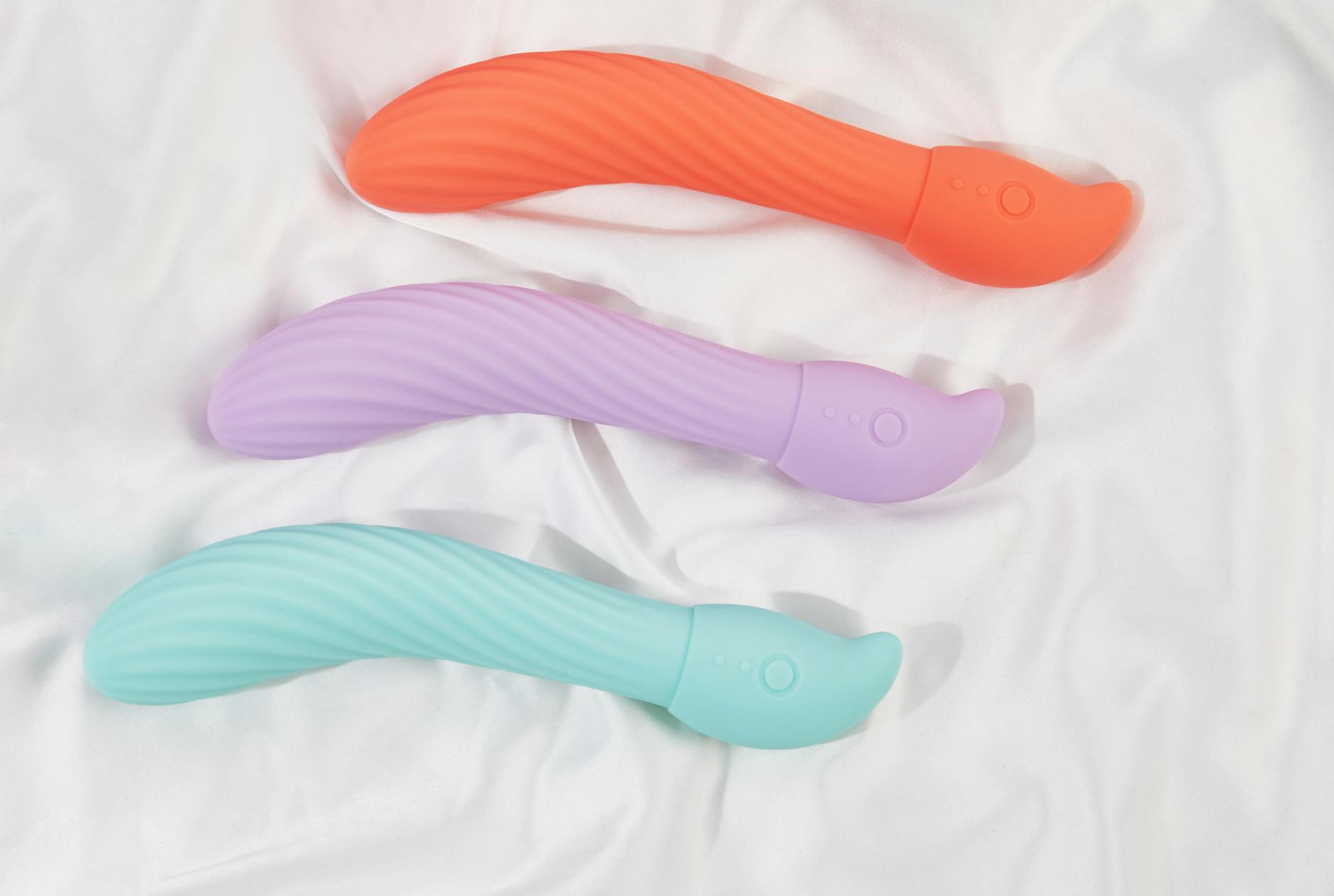
How to Use a Lemon Vibrator During Perimenopause When Hormones Are Shifting
Perimenopause isn't menopause yet, but the hormonal swings hit different. Here's what changes in your body, what stays the same, and how lemon clitoral vibrators fit into the picture.
Let's be real. Perimenopause is not menopause, but it absolutely feels like your body is playing a prank on you. One month your arousal hits like it always has. The next month, it's slow. Your clitoris feels different some days. Orgasms are deeper one week, shallower the next. And no one warns you that this wild hormone ride lasts anywhere from four to ten years.
Here's what's happening: your estrogen and progesterone are doing a slow, chaotic decline. They're not gone yet, but they're bouncing all over the place. This creates a moving target for pleasure. The good news? Lemon vibrators are uniquely designed to handle this unpredictability.
During perimenopause, your clitoral tissue is receiving less consistent estrogen support. Estrogen keeps tissue plump, well-hydrated, and responsive. When it dips, that tissue becomes more sensitive in some ways and less reactive in others. Your natural lubrication also becomes less reliable. Some days you're fine. Other days, friction feels off.
Your arousal timeline stretches. If you used to reach peak arousal in five minutes, expect ten to fifteen now. That's not failure. That's just your nervous system asking for more time to catch up.
The clitoral nerve endings don't disappear. They're still there, still capable. But they need different conditions to wake up. Direct vibration sometimes feels too intense during hormonal lows. Suction, on the other hand, creates a gentler stimulation that doesn't require the same level of tissue thickness and lubrication to feel good.
A lemon vibrator uses suction technology rather than pure vibration. This matters enormously during perimenopause because suction engages nerve clusters without requiring friction against increasingly delicate tissue. You get stimulation without the sensation of rawness that can come when hormone levels dip.
When you're in a low-estrogen phase of your cycle, traditional vibrators can feel harsh. A lemon vibrator's gentle suction mode lets you build arousal without discomfort. As your hormones climb back up mid-cycle, you can crank the intensity up and still feel amazing.
The Lem vibrator, in particular, offers multiple suction patterns. This variability is crucial when your body's responsiveness shifts week to week. You're not locked into one type of sensation.
Here's what I recommend to clients in perimenopause:
Start with a longer warm-up. Give yourself twenty to thirty minutes of foreplay, fantasy, or whatever gets you mentally engaged. Your clitoris is not broken, but the hormonal support system around it is in flux. Mental arousal becomes more important than ever.
Use the Lem on the lowest suction setting first. Place it and let it sit for thirty seconds before turning it on. This lets your body register the sensation and create arousal before the suction begins. Then start at pattern one or two. Your clitoris will tell you when it's ready for more.
Switch patterns every sixty to ninety seconds. Don't lock into one rhythm. The beauty of a lemon clitoral vibrator is that the different patterns keep your nervous system engaged. Changing patterns also prevents the clitoris from habituating to one sensation, which becomes more likely during hormone fluctuations.
Lubricate even if you think you don't need it. During your high-estrogen days you might produce plenty naturally. During your low days, use a water-based lubricant anyway. It's not a sign of failure. It's a buffer that lets the suction work without creating friction sensitivity.
This approach accounts for the fact that your body is literally changing week to week. You're not fighting against a static problem. You're working with a moving target.
If your cycle is still somewhat regular during perimenopause (and for many people it is, at least for a while), you can use that to your advantage.
During the follicular phase, when estrogen is climbing, your clitoris is more reactive. You might enjoy higher intensity patterns on your lemon vibrator. Your arousal builds faster. Your natural lubrication is more reliable.
During the luteal phase, after ovulation, progesterone rises and estrogen fluctuates. This is often when you feel less instantly aroused. This is when the gentle, patient approach with lower suction settings feels better. Your body isn't less capable of pleasure. It just needs different conditions.
The breakthrough many of my clients have is understanding that these shifts are not moods. They're not desire problems. They're hormonal reality. A lemon clitoral vibrator doesn't fight your hormones. It adapts to them.
Many people assume their orgasms will get worse during perimenopause. Usually the opposite happens. Your orgasms often become more intense, more localized, and more deeply satisfying. They might take longer to build, but the payoff is frequently bigger.
This is because your pelvic floor is still relatively supported by estrogen (compared to post-menopause), but the hormonal calm of approaching menopause has already started to settle in. You're less in your head about cycles and fertility. Pleasure becomes less about performance and more about sensation.
With a lemon vibrator, you can actually explore this. The different patterns and intensities let you find the specific rhythm that triggers your deepest orgasm response during this phase of your life.
Don't assume low libido means you need more intense stimulation. Often the opposite is true. When hormones dip, gentleness works better than force.
Don't skip lube because you're not completely dry. Consistency of sensation matters more than raw lubrication amount. A light coat of water-based lube plus suction creates ideal conditions.
Don't stick with one pattern because it used to work. Your clitoris is literally in a new hormonal environment. Experiment. Try pattern three instead of pattern one. Give yourself permission to change what works.
Don't assume something is wrong with you if arousal takes longer. Perimenopause is not broken. It's different. A lemon vibrator acknowledges that difference and works with it.
If pleasure completely disappears for more than a few weeks, talk to your doctor. This could point to hormonal imbalance that benefits from treatment. If pain appears during pleasure, same thing. Perimenopause is normal, but pain is not.
If you're struggling to reconnect with your partner during this hormonal shift, consider talking to a therapist who specializes in midlife relationships. The physical changes of perimenopause often arrive alongside emotional and relational transitions. Those conversations matter as much as the physiological adjustments.
Perimenopausal bodies are not declining bodies. They're transitional bodies. Your clitoris is not disappearing. Your pleasure capacity is not shrinking. Your body is reorganizing, and that reorganization often leads to more authentic, more satisfying pleasure once you stop fighting it.
A lemon vibrator doesn't "fix" perimenopause. It acknowledges what's actually happening and gives you a tool that works with your hormones instead of against them. The suction technology, the pattern variety, the gentle approach. All of it aligns with what your body actually needs during this shift.
You're not losing pleasure during perimenopause. You're entering a new chapter where pleasure looks and feels different. And honestly? That's often better.
Perimenopause typically lasts four to ten years for most people, though eight years is the statistical average. It ends officially when you've gone twelve months without a period, at which point you're in menopause. During this entire window, hormones are in flux, which means your pleasure response will shift. Using a tool like a lemon clitoral vibrator that adapts to these shifts can help you stay connected to pleasure throughout.
Absolutely. During your period, your clitoris often becomes more sensitive and responsive because of increased blood flow. Many people find that a lemon vibrator on a lower suction setting feels amazing during menstruation. You're not doing anything harmful. Just make sure you clean it afterward with warm water and toy cleaner.
If you start HRT during perimenopause, your hormonal fluctuations will stabilize, which usually means your arousal response becomes more consistent and predictable. Your lemon vibrator will feel more reliably responsive. You might find you prefer higher intensity patterns than you did during the chaotic perimenopause phase. This is a positive shift, not a negative one.
Yes, but your technique might shift. Many people find that as they move fully into menopause and estrogen drops significantly, they need to use lube more consistently and warm-up time extends. But the suction technology of a lemon vibrator actually becomes even more valuable in menopause because it doesn't require the same tissue thickness and lubrication that traditional vibrators demand. The tool gets better, not worse, as hormones decline.
That's your choice, but I'd gently push back. During perimenopause, lubrication consistency drops, especially during low-hormone phases. Using lube isn't admitting failure. It's acknowledging biology. Water-based lubricant actually makes suction stimulation feel smoother and less intense in a good way. Try it for a few sessions and notice the difference.
There's no medical reason not to use one. If you have pelvic pain, endometriosis, or other conditions that affect pleasure, mention to your doctor that you're using external clitoral stimulation and get their input. But perimenopause itself and lemon vibrator use are totally compatible. Your pelvic health is not damaged by suction stimulation. If anything, gentle stimulation supports pelvic floor health by maintaining circulation and nerve engagement.
Perimenopausal bodies are everywhere. And many of them are discovering that pleasure doesn't disappear during this transition. It transforms. A lemon vibrator meets that transformation halfway. If you're navigating perimenopause and noticing changes in your pleasure, know that this is completely normal and completely manageable. You're not losing anything. You're shifting into a different expression of pleasure that, for many people, feels deeper and more authentic than what came before.
Ready to explore what works for your shifting body? Check out our buying guide to find the right Hello Nancy tool for your perimenopause journey. And if you're looking to reconnect with a partner during this time, our guide on introducing these tools to your partner might help you both feel more comfortable and connected.