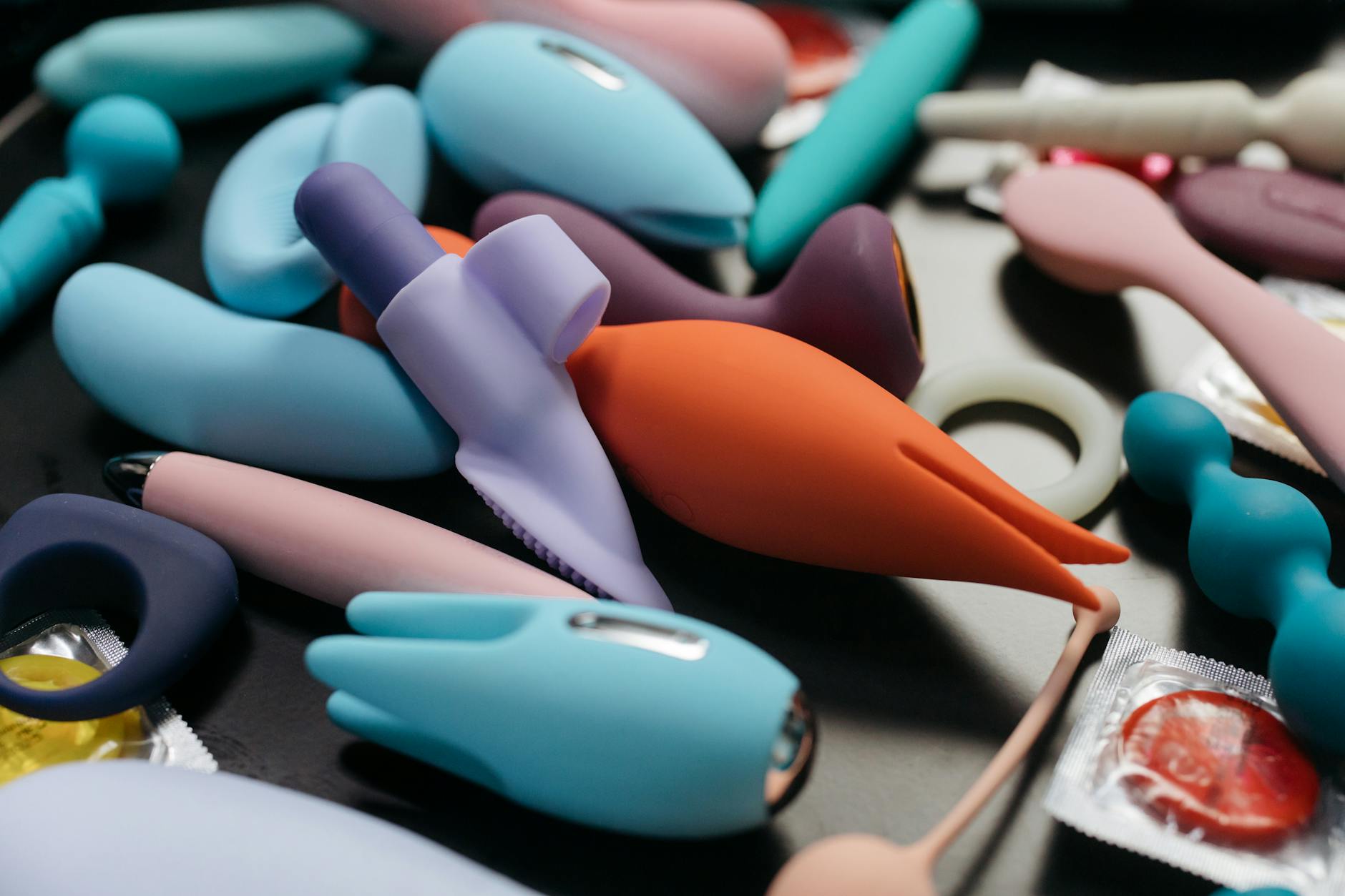
How to Use a Lemon Vibrator for Rebuilding Pleasure After Hormonal Birth Control Changes
When the pill, patch, or ring shifts your desire and sensation. Why a clitoral vibrator helps you reconnect with your body when everything feels different.
You started the pill, the patch, or the ring. Your body changed. Not in the way the insert warns you about, but in a way that matters to you: arousal takes longer, orgasms feel muted, or desire just... vanished. You're not broken. Hormonal contraception alters the neurochemistry of pleasure, and for some people, that change is dramatic.
The good news: it's reversible. And a tool like a lemon clitoral vibrator can help you rebuild sensation and arousal during the transition, whether you're switching methods or staying on the same one.
Here's how it actually works, and what you need to know.
Hormonal contraception suppresses ovulation by keeping estrogen and progesterone levels artificially stable. This matters for pleasure because:
Testosterone drops. Hormonal birth control lowers free testosterone, which is a major driver of desire in people with vulvas. Lower testosterone means lower baseline libido and slower arousal.
Dopamine sensitivity shifts. The brain's reward circuitry depends on the right hormonal balance. Stable hormones can flatten the dopamine spike that usually comes with anticipation and arousal.
Vaginal blood flow changes. Estrogen supports vaginal lubrication and tissue elasticity. When estrogen is artificially regulated, some people experience less natural lubrication and thinner vaginal tissue. This doesn't mean dryness, necessarily, but the sensation changes.
Clitoral sensitivity can dull. For some people on hormonal contraception, the clitoris becomes less responsive to direct touch. Researchers aren't entirely sure why, but the relationship between sex hormones and clitoral nerve sensitivity is real and measurable.
The catch: not everyone experiences all of these. Some people feel nothing. Others feel all of it. And some feel it for three months, then their body adapts and desire returns. Which camp you're in depends on the specific hormonal method, the dose, your baseline hormones, and a handful of factors doctors still don't fully understand.
A clitoral vibrator like the Lem works differently than your finger or a partner's touch. Instead of direct pressure, it uses gentle suction and micro-vibrations to stimulate the clitoral complex. This matters because:
It bypasses dulled sensitivity. If hormonal contraception has made your clitoris less responsive to direct touch, suction stimulation activates different nerve pathways. You're not forcing sensation where there isn't any. You're finding the nerves that still respond.
It builds arousal faster. The Lem's pattern system lets you start low and layer intensity gradually. For people whose arousal is slower on hormonal birth control, that controlled build means you can reach plateau without frustration.
It removes performance pressure. When pleasure feels like work, external stimulation takes the thinking out of it. You're not calculating whether you're aroused enough. The toy does the consistent, rhythmic work while you notice what's actually happening in your body.
Seriousness: this is not a warm-up. It's permission. When hormonal birth control has flattened desire, the first barrier is often just expecting you should feel something by now. Starting with a lemon vibrator means you're setting aside the question of whether you're having the "right" response and just gathering data. What does this actually feel like on your body right now?
Solo exploration gives you information without audience awareness. You're not performing. You can notice texture, pressure, and what patterns feel interesting without wondering if your partner is getting bored. Spend 2-3 sessions with the Lem on your own before introducing it into partnered sex.
Hormonal birth control may not have caused dryness, but sensation is sharper with lube anyway. Use a water-based lubricant on the Lem's head. This isn't a sign something's wrong. It's a sensory upgrade.
The Lem has seven intensity levels. Pattern 1 is barely there. Resist the urge to jump to something stronger. When hormonal birth control has dulled sensitivity, your clitoris may need a few minutes to "wake up." Start low and spend 3-5 minutes there before increasing intensity. Your body will tell you when it's ready to turn up.
They're not the same thing. The Lem might feel really good without triggering a cascade of arousal. That's fine. You're rebuilding the pathway from sensation to desire. Some people need to feel the physical pleasure consistently before the brain catches up. Others need their brain to catch up before the body loosens. You'll figure out which one you are.
If you've been using a lemon vibrator consistently for 3-4 weeks and pleasure still feels flat, it might be worth checking three things.
First: are you hydrated and sleeping? Hormonal birth control interacts with your whole system. Dehydration and sleep deprivation suppress arousal harder than contraception does. This isn't weakness. It's physiology.
Second: is the hormonal method right for you? Some people do better on progestin-only methods like the mini-pill or IUD. Some people need the estrogen in standard pills. Some people need lower-hormone formulations. If pleasure hasn't returned after a few months, a conversation with your gynaecologist about switching methods is fair.
Third: are you stressed? Stress hormones (cortisol and adrenaline) actively shut down the parasympathetic nervous system that arousal needs. Hormonal birth control doesn't cause stress, but it can amplify its impact on pleasure. If your life is chaotic, pleasure will be harder to access regardless of the Lem.
If you're partnered and birth control has shifted your pleasure, introducing the Lem means having a conversation first. Not a big one. Something like: "My body's responding differently to the pill, and I want to explore what still feels good. I'd like to use a vibrator during sex. Are you comfortable with that?"
Most partners are. Some worry it means they're not enough. They're not. Reassurance helps: the Lem isn't replacing them. You're using it because you're rebuilding your own arousal, and they get to be part of that.
Try it during foreplay first. Let them hold it while you guide the intensity. This keeps the focus on connection and exploration rather than performance. Many couples find that using a clitoral vibrator together actually increases intimacy because both people are paying attention to what's working.
Some people's pleasure snaps back within weeks of starting a clitoral vibrator. Others need months. A few find that switching the method is what finally unlocks it. Here's a realistic timeline:
Weeks 1-2: You're noticing sensation. Not necessarily arousal, not necessarily orgasm. Just whether the vibrator feels good.
Weeks 3-4: If the tool is right for your body, you're probably noticing that arousal builds faster or feels more vivid.
Weeks 5-8: Pleasure becomes more consistent. You're less in your head about whether it's working. Your body's learning the new pathway.
Month 3+: Either pleasure has returned and you're using the Lem as part of your regular practice, or it's clear this method isn't the solution and it's time to explore a different contraceptive option.
If it's month two and pleasure still hasn't returned, that doesn't mean the Lem is failing. It might mean the hormonal method is the real barrier.
When hormonal birth control has flattened desire, you're not trying to return to some earlier baseline. You're building a new relationship with your body's pleasure right now. A lemon clitoral vibrator is a tool for that. It's not magic. It won't override chemistry. But it gives your body consistent, non-judgmental stimulation while you figure out what pleasure looks like in this new hormonal reality.
Sometimes that means the vibrator becomes part of your practice long-term. Sometimes it's a bridge tool you use for a few months until your body adapts to the birth control and pleasure returns naturally. Either way, you're gathering information about what works for you. And that's the whole point.
Absolutely. The hormonal IUD releases progestin directly into the uterus, which means lower systemic hormone exposure than the pill. Some people experience fewer pleasure changes on an IUD. Others experience the same dampening of desire. Either way, a clitoral vibrator works the same way and can help rebuild arousal and sensation while you're on it.
Hormones can take 3-6 months to fully rebalance after stopping hormonal contraception. During that time, a lemon vibrator can help you stay connected to pleasure while your body's chemistry shifts back. Some people notice pleasure returning within weeks. Others need the full 3-6 months. If desire hasn't returned after six months off hormonal birth control, it's worth checking in with a doctor because something else might be at play.
Yes. Many people experience reduced sensation in the vulva and clitoris while on hormonal contraception. This isn't permanent, and it doesn't mean something's broken. It's a side effect of the hormonal shift. That's actually why a clitoral vibrator helps. It provides enough stimulation to activate sensation even when your baseline sensitivity is lower.
Yes, and sometimes it's the right call. If you've been on one method for a few months, used a vibrator consistently, and pleasure still hasn't returned, talking to your gynaecologist about trying a different hormonal formula might unlock what the vibrator alone couldn't. The Lem works great during the transition too.
No. This is a myth. Regular vibrator use doesn't cause permanent desensitization. If anything, consistent stimulation helps rewire neural pathways that have been dulled by hormonal changes. That said, if you notice sensation is getting duller over weeks of use, try taking a few days off and using the vibrator less frequently. Sometimes the clitoris just needs a reset.
Then the issue is probably not sensation but hormone levels themselves. Some people's bodies just don't tolerate certain hormonal methods. If you've given a clitoral vibrator a solid 4-6 weeks and pleasure hasn't budged, a conversation with your doctor about switching contraceptive methods is the next step. The vibrator is a tool, not a solution to every pleasure problem.
If hormonal birth control has changed your pleasure and you're not sure where to start, begin here: give yourself permission to rebuild without judgment. Grab a lemon vibrator, spend time alone with it, notice what feels good. Your body's pleasure is still there. It's just speaking a different language right now.
If you have questions about which tool or approach is right for you, reach out. We're here to help you reconnect.