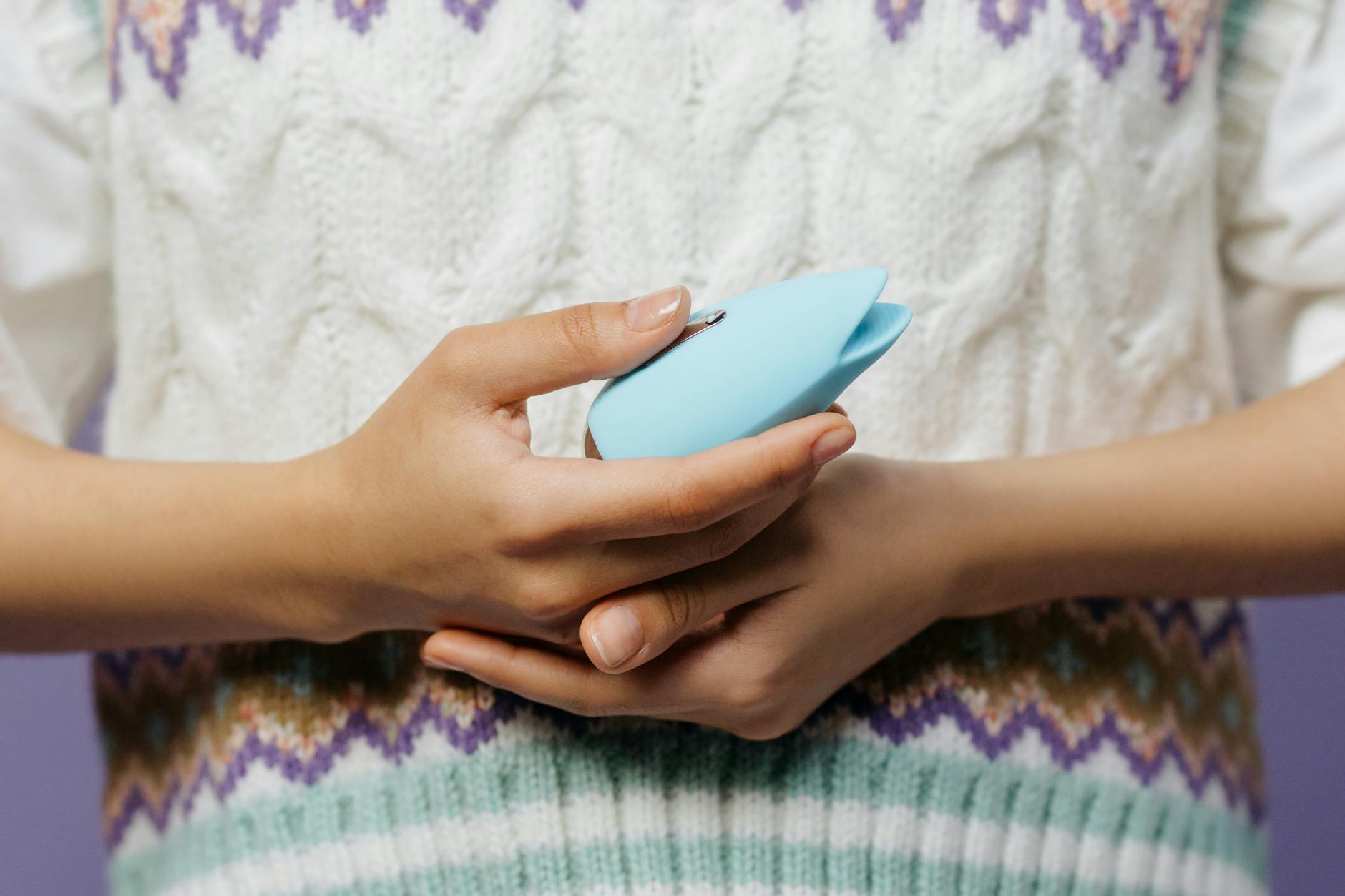
How to Use a Lemon Vibrator When Partners Have Mismatched Arousal Speeds
One of you is ready in five minutes. The other needs twenty. A lemon clitoral vibrator isn't a workaround. It's the solution that makes you both feel wanted.
One of you walks in already half-aroused. The other is thinking about the morning's email chain. This isn't a compatibility issue. This is a nervous system issue, and it's wildly common. The person who takes longer to heat up often feels pressure and shame. The faster partner feels rejected or bored. Then you both avoid the conversation entirely and sex becomes something you schedule around rather than move toward.
It's not about love. It's not about attraction. It's neurobiology.
Some people have faster sympathetic nervous system response. Others have higher baseline cortisol. Some brains are wired for spontaneous desire (you see your partner, your body responds). Others run on responsive desire (you need touch, attention, mental space, and then the engine starts). These are equally valid. Neither is better.
The problem happens in couples when one person's arousal style is treated as "normal" and the other's becomes "the thing we have to fix." If you've been internalizing that your body takes longer, you're probably also bracing against it happening, which makes it slower. That's the trap.
A lemon vibrator shifts the frame entirely. Instead of "one person needs to speed up," the conversation becomes "what if we both get what we need at the same time."
Let me be clear: this isn't about replacing your partner's touch. It's about decoupling arousal from performance.
If you're the slower-to-arouse partner, a lemon clitoral vibrator gives your body stimulation while your mind catches up. You're not lying there waiting for feelings that won't come yet. You're getting consistent, targeted sensation that tells your nervous system "this is safe, this is happening." That permission softens the bracing. Arousal actually follows.
If you're the faster-to-arouse partner, using a lemon vibrator during your partner's warm-up phase keeps you engaged and present instead of restless and checking out. You're both active. You're both getting sensation. The energy in the room is collaborative instead of stalled.
Phase one: separate warm-ups (the first 5-10 minutes). The slower partner uses the lemon vibrator solo while the faster partner touches them, kisses them, or just stays present. No pressure to perform arousal yet. No faking. Just sensation and attention.
Phase two: layered stimulation (the next 10-15 minutes). The lemon vibrator keeps working on the clitoris while the partner engages with the rest of the body. Hands on breasts, inside the vagina, wherever arousal is building. The vibrator isn't doing the whole job. It's part of an orchestrated thing.
Phase three: integration (as arousal deepens). Some couples keep the lemon vibrator going during penetration. Some pause it. Some hand it back and forth. The point is neither of you had to abandon your actual arousal speed to get here. You both got what you needed.
Don't spring the vibrator on anyone. This works only if you've already agreed that mismatched speed isn't a problem to solve, it's a condition to design around.
The script: "I've noticed one of us usually waits for the other to catch up. What if we stopped doing that? What if we both got touched and stimulated while we're figuring out what we want? I'm thinking about trying a lemon clitoral vibrator together. Not instead of you. Alongside you. What do you think?"
If your partner feels threatened, that's information. Maybe they feel like they're being replaced. Maybe they think their touch isn't enough. Those are real feelings that need real conversation before you bring anything into the bed. Using a toy won't fix a trust or intimacy gap. Talking will.
But if the response is "okay, let's try it," you're golden. You've already done the hardest part.
Start outside the bedroom. Hold the lemon vibrator together. Show each other how it feels in your hand. Talk about settings. For most couples, pattern one or two is enough for partnered use. You don't need the strongest setting. You need enough sensation to bridge the arousal gap.
When you do bring it into sex, use lubricant (water-based works best with silicone toys). Have it in reach on the nightstand, not hidden in a drawer where it feels forbidden. The easier it is to grab, the less charged it feels.
Start with the slower partner using it on themselves while the faster partner is present. This removes the "am I doing this right" anxiety that kills arousal. You're learning your own body and what you respond to. Your partner is just there, touching you, watching, being with you. That's plenty.
After a few sessions, you can experiment with the faster partner holding it. But go slow. The goal isn't to rush anything. It's to release the pressure that's been slowing things down.
Most couples report that using a lemon vibrator together actually deepens intimacy instead of replacing it. Why? Because you're finally honest about what you need instead of pretending you both warm up on the same timeline.
The slower-arousal partner stops feeling broken. They're not. They're just differently wired. Getting direct clitoral stimulation while being touched by someone who loves them is incredibly validating. Your body isn't the problem. Your body is just different.
The faster-arousal partner stops feeling impatient. They can stay engaged. They can focus on their partner's pleasure instead of their own restlessness. That's a shift in presence, which actually deepens sex overall.
You also get to learn something about each other: what patterns on the lemon vibrator does your partner respond to? What kind of touch works alongside it? How long do they usually need before they're fully ready? This is information that makes future sex better even on nights you're not using the vibrator.
"Won't she become dependent on it?" No more than you depend on her hand or her mouth. It's a tool. You use it when you need it. You don't use it other times. That's not dependence. That's just logistics.
"What if I'm jealous of the toy?" That's fair. Name it. Talk about it. A lemon vibrator isn't a competitor. It's a teammate. But if you're feeling replaced, the issue isn't the toy. The issue is you need more direct attention from your partner. Ask for that. Most people are relieved when the conversation finally happens.
"What if we're going too slow?" You're not. Most couples spend a few weeks exploring the vibrator on its own before they layer it into partnered sex. There's no deadline. The slowest version is the one that actually works.
Mismatched arousal timelines have probably been part of your relationship for years. You've developed habits around it. Maybe you've internalized some shame. Maybe you've built resentment. A lemon vibrator isn't going to undo all of that in one session.
But it gives you permission to stop pretending your bodies need to cooperate on the same schedule. It gives you a language for "I need something different." And it gives you a practical way to both feel wanted and attended to at the same time.
Absolutely. In fact, it's one of the most helpful applications. You can use a clitoral vibrator during foreplay while your partner is still warming up, then keep it going during penetration if that feels good. The point is nobody has to wait around pretending to feel something they don't feel yet.
There's no standard timeline. Some people need 5 minutes of direct stimulation. Others need 20. Pay attention to your own body. When you feel the shift from neutral to aroused, when the clitoris feels more sensitive, when lubrication is present and your pelvic floor is starting to soften. That's your signal, not a clock.
No. It's actually the opposite. Couples who use clitoral vibrators together are usually more communicative about desire and pleasure. They've already done the hard work of saying "here's what I need." That's intimacy.
That's a conversation worth having directly. The facts: a vibrator can't replicate human touch, intimacy, or connection. What it can do is provide consistent clitoral stimulation while you're both focusing on each other. It's an addition, not a replacement. If your partner still feels insecure, explore that together. Sometimes it's not really about the toy.
Frame it as something for both of you, not something wrong with them. "I read that couples with different arousal speeds get a lot out of using vibrators together. Want to try it?" You're naming a pattern and proposing a solution together. That's collaborative, not critical.
The standard lemon clitoral vibrator works great for couples because it's compact, gives strong and steady sensation, and has multiple patterns so you can adjust based on what feels good. You don't need anything fancy. You just need something reliable.
Mismatched arousal speeds stop feeling like a problem when you stop treating them like one. A lemon vibrator helps you do that because it makes space for both of you to be exactly where you are in the moment. That's the whole thing. Not faster. Not synchronized. Just both there, both attended to, both feeling good.
If you're ready to explore this together, the conversation starts with honesty. "Our arousal speeds are different. What if we stopped fighting that and designed around it instead?" Everything else follows from there.