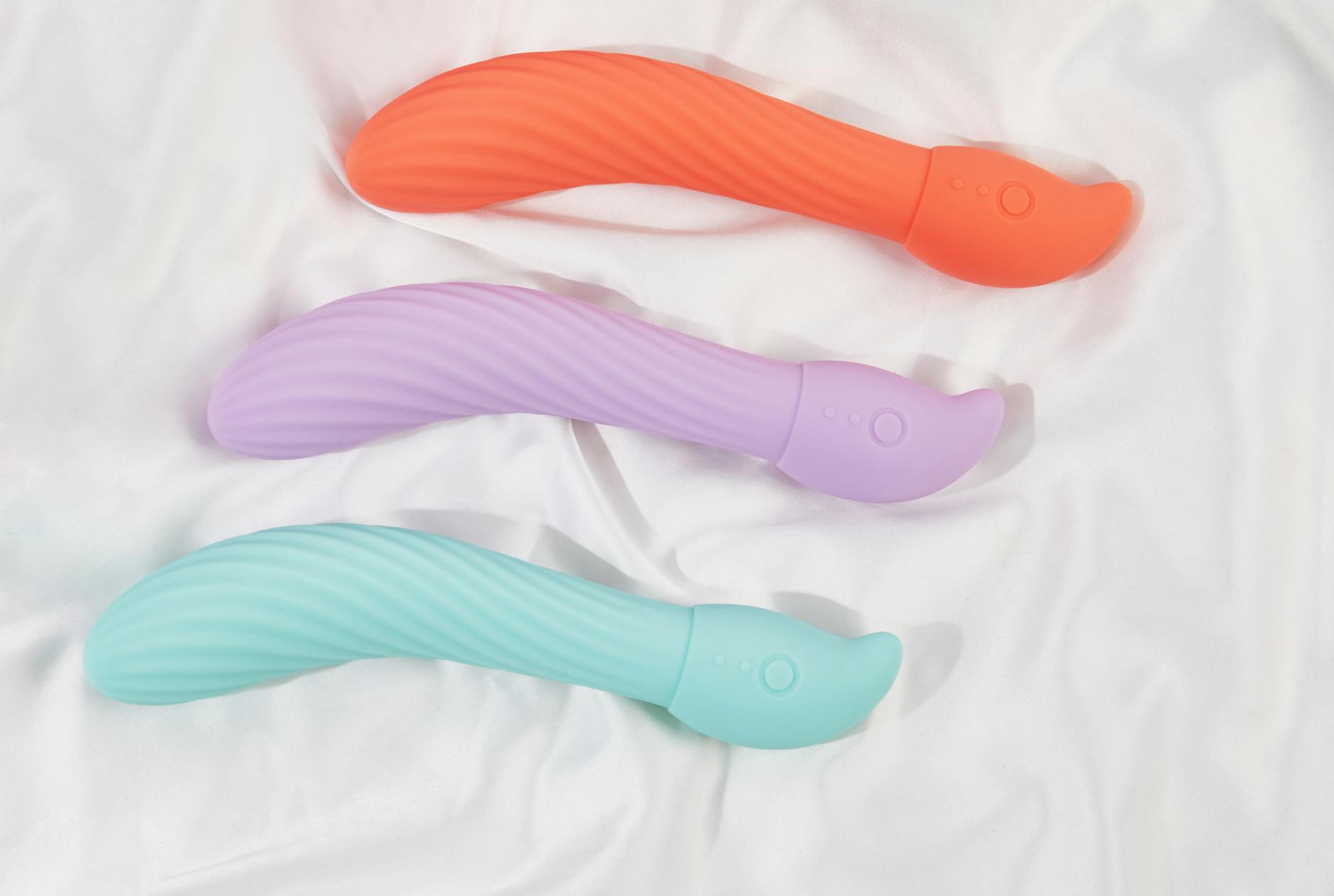
How to Use a Lemon Vibrator Safely With Antidepressants
Your antidepressant isn't supposed to kill your sex drive. Here's what's happening and exactly how a lemon clitoral vibrator can help you find your way back.
Let's be real. SSRIs and SNRIs save lives. They also flatten sensation in ways that feel like someone turned down the volume on your entire body. You're not broken. Your brain chemistry changed, and your nervous system adjusted.
That's not a failure of the medication. That's how the medication works. But it doesn't mean your pleasure is gone permanently. It's just quieter, and it needs different tools to wake up.
A lemon vibrator (also called a lemon clitoral vibrator or lemon sucker) works differently than traditional vibrators precisely because of how antidepressants change your sensation. Here's what you need to know before you start.
SSRI medications reduce serotonin reuptake, which means more serotonin stays in your brain longer. That's the point. But serotonin also regulates genital blood flow, arousal speed, and orgasm intensity. Lower sensitivity isn't a side effect you're imagining. It's neurological.
The numbing usually shows up as one or more of these: longer time to arousal, difficulty reaching orgasm, less intense orgasms when they do happen, or a feeling of physical disconnection during sex. Some people experience all four.
Here's what matters: this doesn't mean your clitoris stopped working. It means your nervous system is processing sensation at a different threshold. A lemon vibrator addresses this specifically because it uses suction rather than vibration alone.
Traditional vibrators send rapid oscillations directly into tissue. If your nervous system is already dampened by medication, you might not feel much of anything. You'd need to go to higher frequencies or more intense settings, which gets uncomfortable fast.
Suction works on a different principle. Instead of vibrating, it creates rhythmic pressure and release. This activates nerves without requiring the same base-level sensitivity. Think of it like the difference between tapping on a surface versus gently pulling on it.
The lemon suction vibrator activates broader tissue areas and engages the whole clitoral structure, not just the visible tip. For people on antidepressants where sensitivity is the limiting factor, this difference is often the difference between feeling almost nothing and feeling something real.
If you've tried a regular vibrator on your antidepressant and it felt like holding a phone on silent against your skin, don't assume a lemon vibrator will instantly fix everything. It will help. But the fix requires patience.
Begin on the lowest setting. Honestly. On setting 1 or 2 on most lemon clitoral vibrators, you're working with subtle suction. Your job is to notice what you can feel, not to chase intensity. Many people spend three to five sessions just exploring what sensation feels like at a lower threshold before moving up.
The temptation is to jump to setting 5 or 6 right away. That's how you create numbness through overstimulation and miss the gradual rekindling of sensitivity. Your nervous system needs permission to wake up slowly.
When you take your antidepressant changes how you respond sexually. Most SSRIs peak in your bloodstream about 4 to 6 hours after you take them. That's usually when sexual sensation is flattest.
If you take your medication in the morning, late afternoon and evening are often better windows for pleasure. If your dose is split or taken at night, that timing works in your favor. Explore the time windows when you naturally feel a bit more responsive, and start your lemon vibrator practice then.
Your doctor won't volunteer this information. They're not thinking about your pleasure timeline, even though they should be. But you can test it yourself. Track a few sessions across different times of day and notice whether sensation shifts.
Without strong baseline arousal, the lemon suction vibrator works best when you've already started the process. Set a realistic amount of time. 15 to 20 minutes of foreplay (solo or with a partner) before you introduce the toy.
This means touching other parts of your body first. Chest, inner thighs, neck. Breathing slowly. Maybe a small amount of visual content that actually interests you (not something you think you should want). The goal is to shift your nervous system from sympathetic (alert, stressed) to parasympathetic (relaxed, receptive).
Then introduce the lemon vibrator. You're not trying to shock your system into arousal. You're adding to arousal that's already beginning to build.
If you're in a relationship, the sexual flatness hits both of you. Your partner might feel rejected or assume it's about them. It usually isn't. It's your neurotransmitters on loan to a pharmaceutical company.
Have a conversation before you use the lemon vibrator with them present. The message isn't "I need this toy because you're not enough." The message is "My medication is changing how I experience sensation. We're going to experiment with this together so we can rebuild what we're missing."
Let your partner know that you want them to slow down too. If you're used to 5 minute arousal cycles and now you need 15 to 20, that's the new reality for a while. Some couples find this shift actually deepens connection because it forces presence and attention instead of habit.
You might eventually find that shifting when you take your dose helps. If you take your SSRI in the morning, could you move it to bedtime? If you take it at night, could you move it to morning? Some people have flexibility. Some don't, depending on their specific prescription.
Don't change your dosing schedule without talking to your doctor. But do mention that sexual side effects are affecting your quality of life. That matters medically. A good doctor will work with you on timing or dosage or trying a different medication class. If yours doesn't, find one who will.
Alternative medications within the SSRI class sometimes feel different. Bupropion (Wellbutrin) is actually known to sometimes improve sexual function. Vilazodone (Viibryd) has a lower rate of sexual side effects than some others. These conversations are worth having.
Don't expect fireworks immediately. You're retraining your nervous system to perceive sensation it's been ignoring for months. Expect week one and two to feel like gentle exploration. Maybe some tingling. Maybe sensation that's still pretty quiet.
Week three and four are often when people start noticing actual arousal shift. By week six or eight, many people tell me they've rebuilt something close to their baseline sensitivity. Not identical, but functional and pleasurable.
If after eight weeks of consistent practice you're still feeling almost nothing, go back to your doctor. That conversation is different when you can say "I've been trying these techniques and I'm still not feeling it." That gives your doctor real information to work with.
Orgasms on antidepressants often feel different even when they return. They might be shorter, less intense, or more localized. That doesn't mean they're bad. It means they're different.
Many people find that with a lemon clitoral vibrator and the warm-up work, they can reliably reach orgasm again. Sometimes it's faster than the old normal. Sometimes it's slower but more pleasurable in new ways. The win is getting back to some kind of reliable sexual response, not recreating exactly what you had before medication.
If you've never had an easy orgasm, or if you're new to antidepressants and haven't explored yet, a lemon vibrator is an excellent place to start learning your own body under these conditions.
Sexual side effects from antidepressants are common and underreported. Your doctor might not mention them unless you do. You might feel ashamed, like your body is broken or your relationship is failing. Neither is true.
Your nervous system is working exactly as the medication intended. Your pleasure is worth troubleshooting. A lemon vibrator is one tool. Timing adjustment is another. Communication with your partner matters. And talking honestly with your prescriber about what's changed opens doors.
You don't have to choose between mental health and sexual pleasure. You get both. It just takes a little more intention, a little more patience, and usually a tool that works with how your body is responding right now.
Yes, absolutely. A lemon suction vibrator often works better on SSRIs than traditional vibrators because it doesn't rely on high-frequency vibration to create sensation. Start on the lowest setting and work up gradually as your sensitivity returns.
It varies widely. Some people notice improvement in two to three weeks. Others take eight weeks or more. Consistency matters more than how long you wait. If you're using a lemon vibrator regularly with proper warm-up, you're signaling to your nervous system that pleasure matters, and that usually accelerates the return of sensation.
You don't have to, but mentioning sexual side effects is important. Your doctor needs to know if antidepressants are affecting your sex drive or sensation so they can explore options. You don't need to say "I bought a toy." You can just say "I'm working on rebuilding sensation," and that's enough.
If after six to eight weeks of consistent practice with proper warm-up and timing, you're still not feeling much, that's worth bringing back to your doctor. It might mean your dose is too high, you need a different medication, or there's a different factor at play. You might also benefit from talking with a sex therapist or relationship coach who specializes in this, because sometimes the block isn't physical.
Yes. Many couples find that incorporating a lemon vibrator into partnered sex helps rebuild sensation and pleasure together. It's not about the vibrator replacing your partner. It's about using a tool that works with how your body is currently wired. See our guide on how to use a lemon vibrator with your partner during sex for specific techniques.
If you've tried a lemon vibrator and regular vibrators and still nothing, that might point to a dosing issue or a medication that's not right for you. It could also mean you'd benefit from working with a sex therapist who understands antidepressant side effects. Contact Hello Nancy if you want recommendations on next steps, or talk to your doctor about whether a different SSRI might feel different.
Antidepressants change how your body feels pleasure, and that's hard and frustrating. A lemon vibrator isn't magic, but it's a tool designed for exactly this problem. Low starting settings, proper warm-up, attention to medication timing, and patience with yourself add up to a real return of sensation.
Your mental health matters. Your sexual pleasure matters. You don't have to choose. It just takes intention, the right approach, and maybe a little help from a tool built for how your body works right now.