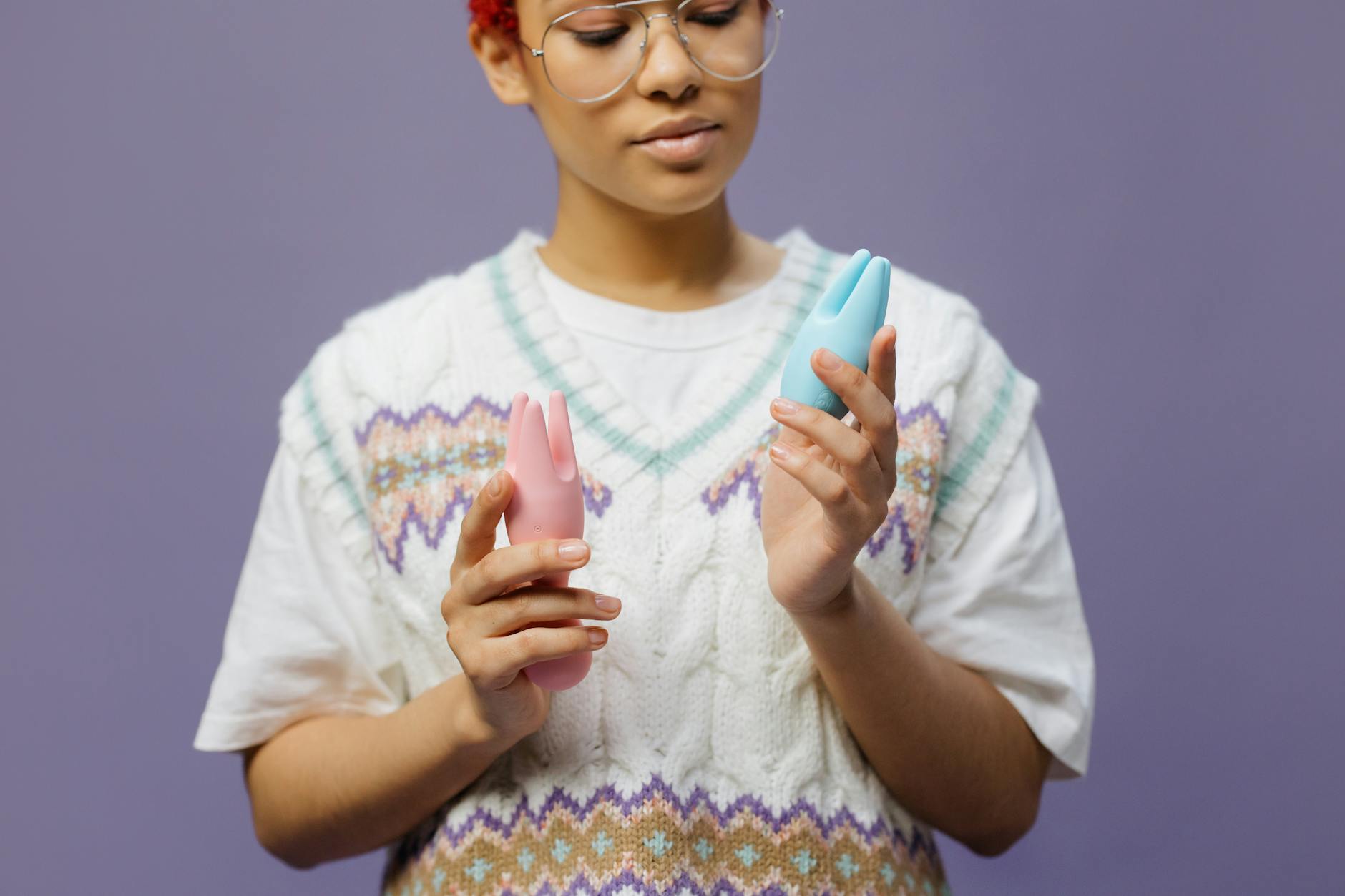
Here's the thing nobody explains: using a lemon vibrator or any clitoral vibrator with condoms, dental dams, or other barriers feels completely different than using it without them. And a lot of couples just... stop using vibrators during partnered sex because they assume the barrier makes it impossible. That's not true, but the barrier does change the sensation and the logistics. So you need to know what's actually happening and how to make it work.
When you use a lemon vibrator through latex (condom or dental dam), the vibration still travels through, but it loses some of its intensity. You're not getting the full power directly against tissue anymore. Latex dampens vibration the way a muffled speaker sounds softer than a clear one. Not bad, just different.
For some people, that's actually preferable. If you have a highly sensitive clitoris or you've been using vibrators solo and find that partnered touch gets overstimulating, a barrier can actually make the sensation feel more wearable during sex.
For others, the loss of directness is frustrating. You're used to the full sting of your lemon vibrator's suction, and suddenly it feels muted. That mattered enough to my clients that I include it in the initial conversation.
Option 1: Vibrator on the outside of the barrier. This is the most common. Your partner is inside a condom. You apply your lemon clitoral vibrator to the condom itself, stimulating you through the latex. The vibration penetrates, but muffled. This works best if you're comfortable with slightly reduced intensity.
Option 2: Vibrator on your skin, barrier between you and your partner. If you're using a dental dam or you're the one wearing a barrier (like a female condom), you can apply the vibrator directly to your skin on the dam side. The barrier is between your partner's mouth or fingers and you, but the vibrator is making contact with skin and barrier together. This preserves most of the sensation.
Option 3: Barrier on the vibrator itself. This is less common but it works. Some people stretch a condom over a vibrator (like a lemon vibrator or other clitoral toy) before use. This is smart if you're using it for penetrative contact or if you're passing it between partners. Just make sure the condom is secure before you start. A slipped condom mid-session is annoying and unsafe.
Most couples I work with bounce between Options 1 and 2 depending on what feels right in the moment.
This is the part people miss. When you add a barrier to a vibrator, friction changes. Latex on skin feels different than skin on skin, and it drags differently. Without enough lubrication, the barrier can feel sticky or create uncomfortable pulling sensations.
Use more lube than you think you need. If you're using a condom and a vibrator, apply lube to the outside of the condom, then apply your vibrator. The barrier should feel slippery and smooth under the vibrator, not grippy.
If you're using a dental dam, lube the side touching your partner's skin. You can also apply a small amount of lube to the dam itself on your side. This reduces the muffled sensation and makes the whole experience feel less like there's a plastic sheet in the way.
Water-based lube is your friend here. Oil-based lubes degrade condoms and latex. Silicone lubes can damage silicone vibrators (though if your lemon vibrator is sealed well, you might be okay, but why risk it).
When you're used to using a lemon vibrator solo with direct contact, adding a barrier forces you to slow down and adjust your angle. That's not a bug, it's often a feature.
Partners sometimes rush or apply pressure unevenly when they're using a vibrator for the first time during sex. Adding a barrier creates a natural speed bump. You have to be more intentional. You're thinking about angle, pressure, and feedback instead of just pressing hard and hoping it works.
Start at a lower intensity setting and pay attention. Many people using a clitoral vibrator with a condom for the first time are shocked at how much sensation comes through. You're feeling both the vibration and the partner's movement underneath it. That combination is wild if you're not expecting it.
If you're using a lemon vibrator during oral sex with a dental dam, the sensation profile is totally different from condom use. A dental dam muffles sensation more than a condom does, but it also creates a more defined surface for the vibrator to work against.
The best move here is to position the vibrator so you can feel both the dam and some pressure through it. You're not trying to pretend the dam isn't there. You're incorporating it.
Some people stretch the dam slightly so it's taut but not painful. That increases vibration transmission. Others prefer it a little looser for comfort. Both work. The communication part is doing a quick check-in: "Is this feeling good or too muffled?" and being willing to adjust.
Four things tank the experience with barriers and vibrators.
First: using oil-based lube. It ruins condoms and degrades some toy materials. Don't do it.
Second: forgetting to lube at all and expecting the barrier to be enough. Latex on skin without lube is uncomfortable. Your clitoris doesn't care about your safety if it feels like you're rubbing it with sandpaper.
Third: expecting the same intensity as no-barrier sex. A condom muffles vibration. That's just physics. Going in with realistic expectations saves disappointment.
Fourth: positioning the vibrator with no control. Barriers move. If you're holding the vibrator loosely or at a weird angle, the barrier can slip or fold, and now you're stimulating nothing or creating uncomfortable pressure. Hold it steady.
If you're in a new partnership or you're introducing barriers and vibrators together for the first time, naming what's happening removes awkwardness.
Not: "The condom is killing the sensation, sorry."
Yes: "I want to use my vibrator with the condom. We might need to adjust the angle or add more lube. Let me know what feels good."
This frames it as a collaborative thing instead of a problem. You're experimenting together, not working around a limitation.
The other thing worth saying out loud: if the barrier is reducing sensation too much for you, you have options. You can increase vibrator intensity (try a higher setting on your lemon vibrator). You can add more lube. You can adjust positioning. Or you can pause, take the barrier off, and reevaluate.
That last option is important. Safe sex is non-negotiable, but so is pleasure. If a barrier makes sex unfun for both of you, that's data. You talk about it, you find a solution that works for both of you.
I'll say this plainly because it matters: if you're in a new relationship or you haven't both been tested recently, barriers are non-negotiable. That's safety. The sensation difference is real and sometimes annoying, but it's the cost of protection.
What's not true: that you can't have great sex with barriers. You can. Lots of people do. It just requires intention instead of autopilot.
If you're in a long-term partnership and you've both been tested and are monogamous, barriers might not be necessary. But if you are using them for other reasons (pregnancy prevention, comfort), they still work fine with vibrators. You just adapt.
Barriers with vibrators make the most sense in these situations: new partners before you've both been tested, you're using a vibrator that's being shared between partners, or you're using toys during penetrative sex and want extra protection.
Barriers during solo vibrator use? Not necessary unless you have a specific health reason.
Barriers during partnered oral sex? Absolutely smart if either of you is unsure of status.
Barriers during partnered penetrative sex with a vibrator? Depends on your situation, but they work fine if you need them.
If you want to try this and you're not sure how, here's the exact sequence that most couples tell me works best.
Start with foreplay without the vibrator. Get comfortable, build some arousal. When you're ready to introduce the clitoral vibrator, you've already established what feels good with hands or mouth.
Apply the vibrator to the condom or barrier at a lower intensity (1 or 2 on your lemon vibrator). Pay attention to the sensation. Is this muffled enough to feel different, or is the vibration still punchy?
Add more lube if you want more glide. Adjust the angle until you find the sweet spot.
Increase intensity slowly. What felt muffled at setting 2 might feel perfect at setting 4.
If neither of you is enjoying it, pause. Talk about what's not working. Maybe the barrier isn't compatible with your preferred vibrator style. Maybe you need more lube. Maybe you'd rather save the vibrator for after the condom comes off. All of these are valid.
The goal isn't to perform barrier sex perfectly. It's to stay safe and find what actually feels good for both of you.
Technically yes, but you shouldn't. Latex on skin without lubrication is uncomfortable and creates friction that can reduce pleasure. Water-based lube takes seconds to apply and transforms the experience.
Yes, slightly. Dental dams are thicker and dampen vibration more than condoms do. You'll notice the muffling more with a dental dam. But the sensation is still very present if you add plenty of lube and position the vibrator steadily.
Yes. Some people stretch a condom over the vibrator itself before use. This works if you want to share the toy between partners or if you're using it in a way where barrier protection feels important. Just make sure the condom is secure and won't slip during use. Withdraw slightly to check.
Use non-latex barriers (polyurethane or nitrile condoms, latex-free dental dams). Polyurethane actually transmits vibration slightly better than latex, so you might find you get more sensation. Water-based lube still applies.
For some people, yes, because the sensation is slightly muffled. For others, no. The mental factor of knowing you're protected can actually increase pleasure. It depends on what your brain is doing during sex. If you feel safer with barriers, you might find you relax more and experience more intense sensations despite the physical muffling.
Not recommended. Silicone lube can degrade silicone vibrators, and you want your toy lasting. Stick with water-based lube. It's safer for your body, safer for your toy, and doesn't damage condoms or barriers.
Using a lemon vibrator or other clitoral vibrators with condoms, dental dams, or other barriers is absolutely normal and works fine once you know the mechanics. The sensation changes, the logistics shift slightly, but the pleasure is still there. What matters is knowing how to adapt and being willing to talk about what's working and what isn't.
If you have questions about barrier use or how to make vibrators work with safe sex practices, we're here to help. Reach out anytime.