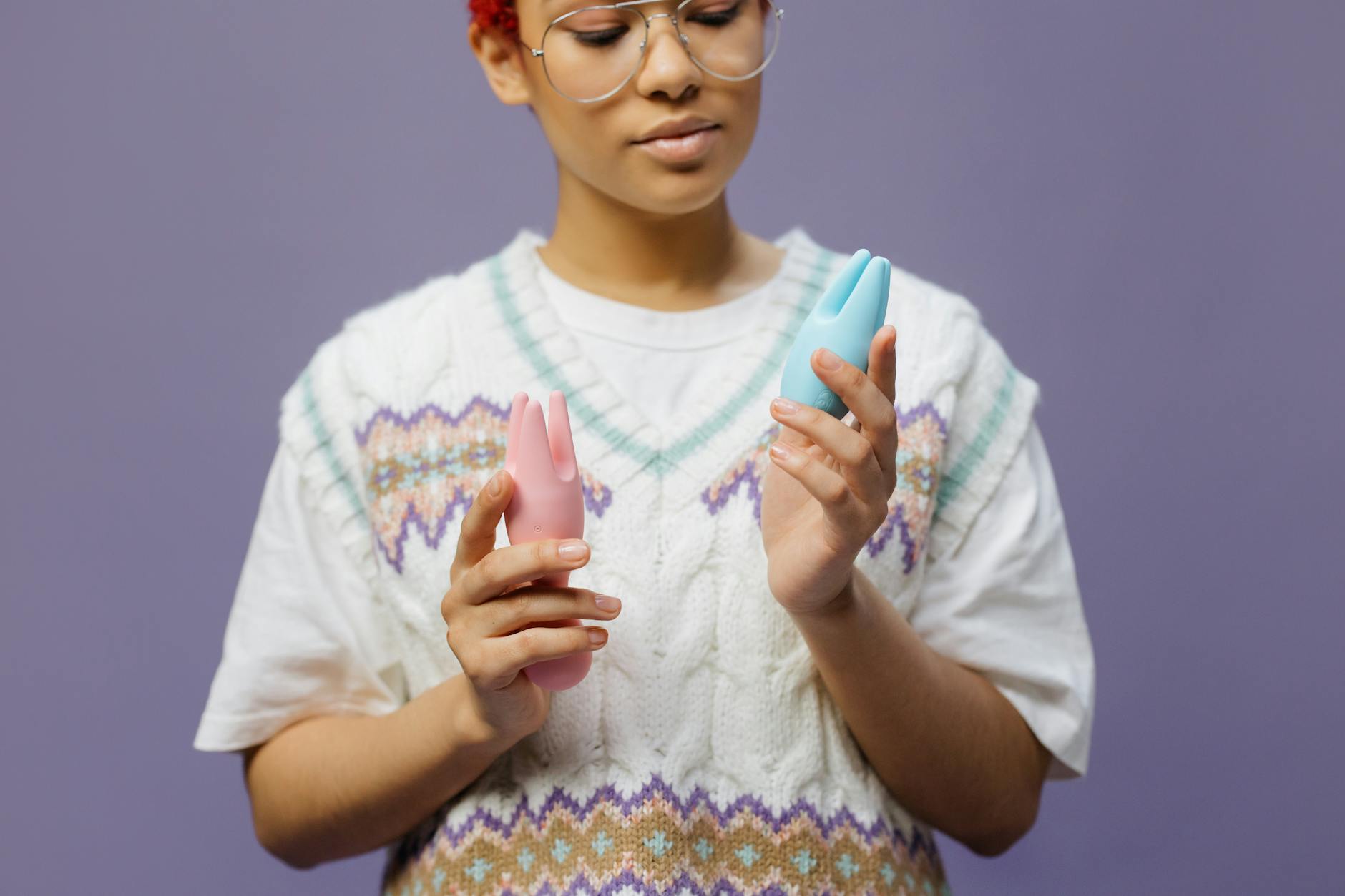
You've spent years — maybe decades — calibrating your pleasure around another person. Their rhythm, their preferences, their body became the map you navigated by. When that ends, your own desire often feels like a foreign language. Using a lemon vibrator during this season isn't about jumping back into sex. It's about remembering that your body, your pleasure, and your capacity for sensation belong entirely to you now.
When you've been in a partnership for years, your nervous system has learned to respond to one person's touch, one person's timing, one person's presence. That attunement is genuine intimacy. But it also means you've outsourced a significant portion of your arousal to someone else's initiative.
After the relationship ends, that external stimulus vanishes. Many people experience what feels like a flatness in their body for months. They wonder if they've lost the capacity for arousal altogether. They haven't. Your body just needs to remember how to be initiated by you.
Lemon vibrators and other clitoral vibrators are particularly useful here because they offer direct, consistent stimulation that doesn't require you to perform or calibrate yourself around a partner's arousal. You set the pace. You choose the intensity. You're both the giver and receiver.
Lemon sucker-style devices like the Lem vibrator work differently than traditional wands. Instead of direct vibration, they use gentle suction and pulsing that feels more like indirect stimulation. This matters for post-breakup reconnection because:
You can start small. After months of sexual dormancy, your clitoris can be sensitive. Suction-based stimulation is less jarring than the aggressive buzz of a wand. You can begin at low intensities and build without overwhelming yourself.
The sensation feels exploratory, not performative. A lemon vibrator doesn't feel like "real sex." That distance from partnered sex can be emotionally useful when you're not ready to feel like you're replicating an old dynamic. You're doing something new, alone, for yourself.
It rewards curiosity. Unlike a wand where intensity is mainly controlled by placement, a lemon clitoral vibrator responds to subtle shifts in pressure and angle. That feedback loop keeps your brain engaged. You're learning your own body in real time.
There's no fixed timeframe for this, but structure helps.
Week one: Just hold it. Don't turn it on. Let your body get comfortable with the object itself. Notice how it feels in your hand, against your inner thigh, near your vulva. This sounds basic, but if you've spent years deferring to someone else's physicality, re-inhabiting your own body takes intentional practice.
Week two: Explore settings without expectation. Turn the lem vibrator on the lowest setting. Run it along your labia, your inner thighs, your hip bones. The clitoris isn't the only nerve-dense spot on your vulva. Spend time mapping what feels good everywhere. You're not trying to orgasm. You're reconnecting.
Week three onward: Add intention. Now you're looking for what actually builds arousal. Maybe it's a particular pattern on the Lem vibrator. Maybe it's thinking about a fantasy you couldn't explore in your long-term relationship. Maybe it's the sheer fact of having time and space that's yours alone. Notice without judgment.
Let's be direct: using a lemon vibrator after a long-term relationship can surface grief. You might find yourself aroused and then suddenly crying. Your body might clench unexpectedly. Your brain might flash to memories of your partner mid-pleasure.
All of that is normal. Your nervous system learned to associate arousal with this one specific person, and rewiring that takes time.
If the grief is overwhelming, that's useful information. It might mean you need more distance from the relationship before solo pleasure work, or it might mean you need to talk to a therapist about the breakup separately from the physical reconnection. Those are two different processes.
But if you're crying and also experiencing pleasure, that's not broken. That's integration.
Don't use a lemon vibrator (or any adult toy) as a speed route back to "normal" sexuality. There is no normal here. You're building something new.
Don't compare your arousal response to what you felt with your partner. You were younger, or the context was different, or the relationship was different. Comparison is the enemy of reconnection.
Don't push yourself toward orgasm as a goal. Orgasm will happen or it won't. What matters right now is sensation, curiosity, and rebuilding trust with your own body. If you make orgasm the finish line, you miss the whole point.
Don't ignore pain or numbness that doesn't shift. If using a lemon vibrator feels actively painful or if you're completely numb after several weeks of exploration, talk to a gynecologist. Sometimes relationship trauma shows up in the body as tension or dissociation.
Many people in long-term relationships have held back certain fantasies or preferences because they required conversation or because their partner wasn't interested. After the relationship ends, there's space to explore without negotiation.
Using a lemon vibrator while you fantasize about something you couldn't before isn't infidelity or betrayal of the ex-relationship. It's freedom. Your thoughts are entirely yours now.
If shame comes up around that freedom, that's also normal. Years of monogamy can leave guilt as a residue even after the commitment has ended. Notice it. Don't let it stop you. Your pleasure belongs to you.
After a few weeks of solo practice with your lemon vibrator, you might notice your arousal patterns shifting. Maybe you want something with a different sensation. Maybe you're ready to explore internal pleasure alongside clitoral stimulation.
That's the signal to explore other options. Hello Nancy offers a range of clitoral vibrators and other toys designed for different sensations and bodies. The point is that reconnecting with one toy is often the gateway to understanding what your body actually wants, separate from what you thought you should want.
Here's something worth knowing: learning your own pleasure patterns solo makes partnered sex better later. You know what you respond to. You can actually tell a new partner what works instead of reverting to old patterns because they feel safe.
Your lemon vibrator is also useful in partnered contexts if you move toward a new relationship. Some couples use lemon sucker-style toys together for mutual pleasure or while one partner is inside the other. You're not starting from scratch with a new partner. You're starting from knowledge of yourself.
There's no magic number. Some people need six weeks. Others need six months. The question isn't time elapsed but whether you feel ready to focus on your own sensation without it feeling like replacement therapy or avoidance. If using a lemon vibrator feels like self-care, you're probably ready. If it feels like numbing, give it more time.
No, and that's actually good news. Pleasure doesn't erase attachment or grief. Using a vibrator won't fast-track your healing. But reconnecting with your own body's capacity for sensation does affirm that you are a whole person independent of that relationship. That matters more than speed.
Orgasm isn't the metric for success here. If you're exploring sensation, noticing what feels good, and spending time in your body, you're doing the work. Orgasm might come later. Many people find that after a period of exploration without pressure, arousal and orgasm return naturally. If they don't after several weeks, talk to a doctor or therapist.
It's normal. Your brain is still processing the relationship. Thoughts and images will come up. You don't have to engage with them, but you also don't have to fight them. Notice them and redirect your attention to sensation when you're ready. Eventually the mental static quiets.
Technically yes, emotionally complicated. Using a toy for solo pleasure is an act of self-reclamation, but ongoing contact with an ex can make that process messier. The cleaner your break, the easier reconnection with yourself becomes. If contact is necessary (shared kids, shared property), set boundaries that protect your healing time.
Guilt often lingers long after a relationship ends. You're not betraying anyone. Your pleasure is not a crime. If the guilt is intense, that might be worth exploring with a therapist. But a lemon vibrator isn't something to feel ashamed of. It's a tool for reconnection.
After a long-term relationship ends, pleasure can feel like a small betrayal of the grief you're supposed to be experiencing. It's not. Your body's capacity for sensation, arousal, and pleasure is separate from the sadness of the loss. You can grieve and also feel alive. A lemon vibrator is just a tool to help you remember that aliveness is still available to you.
Rebonding with your body after long-term partnership is healing work. Take your time. Be curious. And know that pleasure, in any form, is an act of self-respect.